

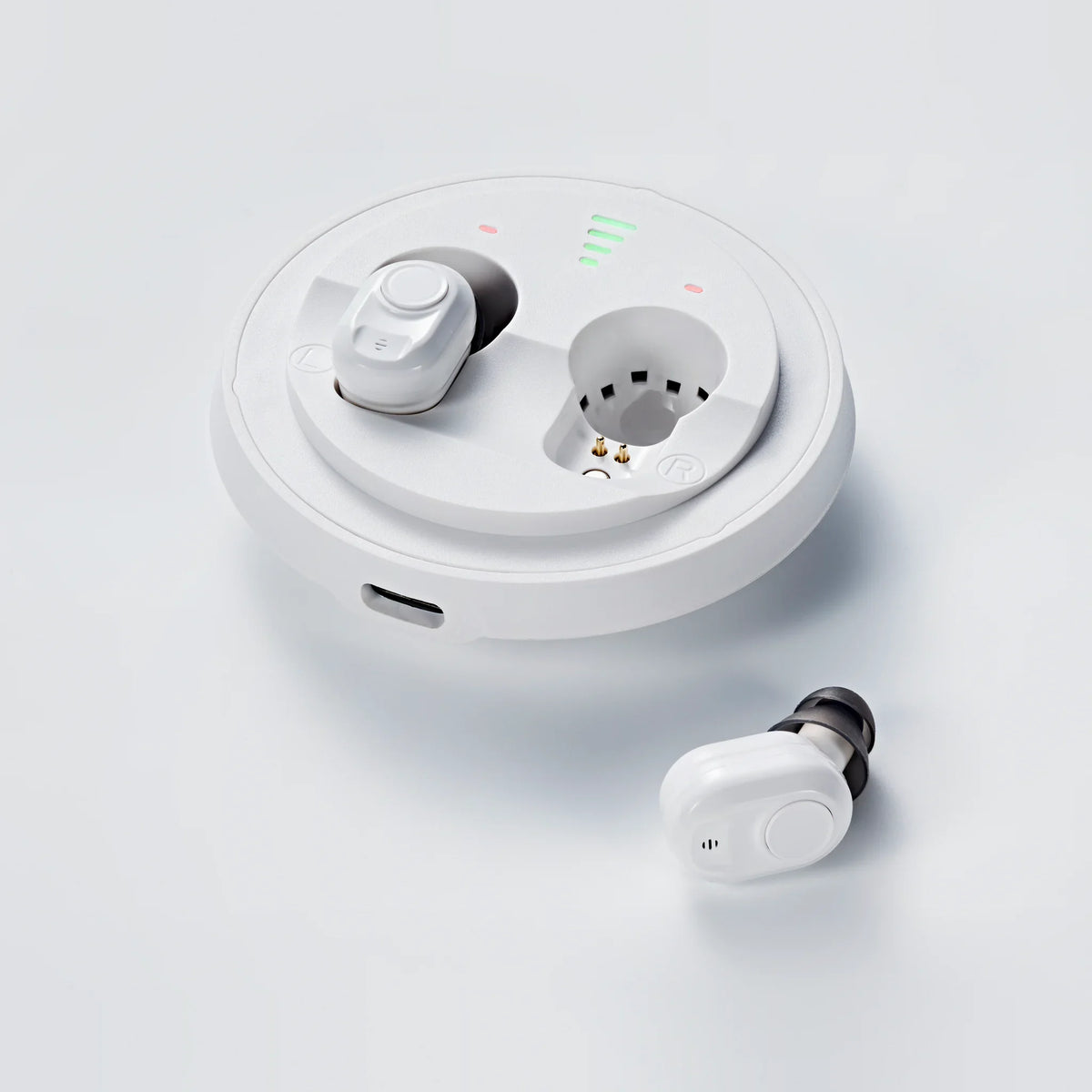
Hearing aids should not feel out of reach. If you have been putting off exploring your options because of cost or a complicated buying process, there is another path.
Over the Counter (OTC) hearing aids are hearing aids adults 18 and older with perceived mild to moderate hearing loss can buy without a prescription. You can purchase them online or in a store without a required medical exam or professional fitting. They are medical devices regulated by the U.S. Food and Drug Administration (FDA).
The OTC category took effect on October 17, 2022, opening a more accessible path to hearing care. Read the FDA’s guide to OTC hearing aids.
What does “over the counter” actually mean?
It describes how you can buy the hearing aid. You do not need a prescription to purchase an OTC device. It does not mean every model has the same features, settings, support, or sound.
Some OTC hearing aids offer volume controls and preset listening programs. Others use software to help select settings. Check the individual product’s setup requirements, including whether a compatible phone is needed.
You can still ask a hearing professional for help. Buying OTC does not prevent you from getting a hearing evaluation, discussing your symptoms, or seeking assistance with a device.
How OTC hearing aids became available
The change took years to reach store shelves. Congress set the process in motion, and the FDA developed the rules for this new category of hearing aids.
2017 — Congress opens the door.
The FDA Reauthorization Act of 2017 directed the FDA to establish an OTC hearing-aid category.
October 2021 — Proposed rules.
The FDA published its proposal and invited public comments.
August 2022 — The final rule.
The FDA announced the rule on August 16; it was published in the Federal Register on August 17.
October 17, 2022 — OTC access begins.
The rule took effect, enabling eligible adults to buy compliant OTC hearing aids directly from stores or online.
The rule includes requirements for labeling, performance, and maximum sound output. Its goal was to reduce barriers to hearing care while supporting safety and effectiveness. Read the FDA’s final OTC hearing-aid rule (PDF) and the FDA’s August 2022 announcement.
For shoppers, the result is more choice in where and how to buy hearing aids—and a new path to more affordable hearing aids. Professional hearing care remains available when you want or need it.
Who are OTC hearing aids for?
OTC hearing aids are intended for adults who believe they have mild to moderate hearing loss. “Perceived” means the category is based on the hearing difficulty you notice; you do not need a test result simply to buy one.
You might notice that conversation sounds muffled, you often ask people to repeat themselves, or you prefer the television louder than others do. Those experiences are reasons to explore your hearing—not a diagnosis or a reliable measure of how much hearing loss you have.
If conversation is difficult even in a quiet room, or loud everyday sounds are hard to hear, a professional evaluation is a better starting point. OTC hearing aids are not intended for children or for severe or profound hearing loss. See the National Institute on Deafness and Other Communication Disorders guidance.
OTC, prescription, or sound amplifier: what is the difference?

OTC hearing aids
Medical devices for adults with perceived mild to moderate hearing loss, available directly to the public. You follow the manufacturer’s instructions for setup and adjustment; support varies by brand.
Prescription hearing aids
Hearing aids obtained through a licensed hearing health care professional. Depending on the device, they can serve people of different ages and levels of hearing loss. The professional helps assess your hearing and fit the device.
Personal sound amplification products
Personal sound amplification products (PSAPs) are designed for people with normal hearing who want to amplify sound in particular situations, such as bird-watching. They are not intended to treat hearing loss. A product looking like an earbud does not tell you which category it belongs to—read its labeling. Read the FDA’s hearing aids and sound amplifiers explanation.
Can OTC hearing aids be more affordable?
Yes. OTC hearing aids can be a more affordable option than prescription hearing aids, although prices and included services vary. Direct purchasing gives you another way to explore hearing support.
When comparing affordable hearing aids, look at the complete purchase: a pair versus a single device, charging equipment, replacement ear tips, setup help, ongoing support, return terms, and warranty coverage. A lower price is useful only when the device and the service fit what you need.
Five things to compare before you buy
- Comfort and handling. Consider the style, ear tips, controls, and how easy the devices are for you to insert and remove.
- Setup and adjustments. Find out how settings are chosen, what you can change, and where to get help if sound is uncomfortable.
- Everyday features. Check charging, phone compatibility, and any streaming features you want. These vary between models.
- Support and returns. Read the return window, fees, conditions, and support options before paying.
- Coverage. Understand the included warranty and what an optional protection plan adds. Review OIDO warranty and protection plans.
Buying without a prescription does not make the settings unimportant
A hearing aid receives sound, processes it, and delivers the adjusted sound to your ear. Its usefulness depends on more than a feature list. The settings, physical fit, and your listening needs all deserve attention.
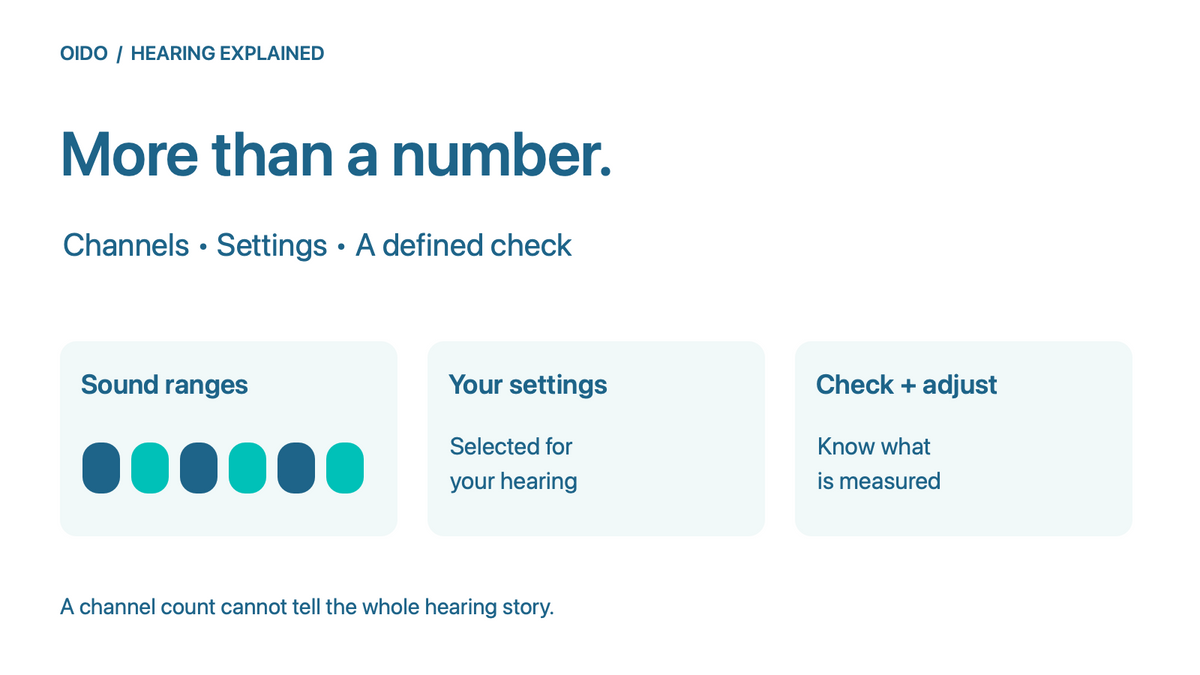
For a simple introduction, read How Do Hearing Aids Work? When comparing specifications, our guide to channels, fitting, and verification explains why a bigger channel count does not automatically mean better hearing.
OIDO’s approach puts personalization and patented verification at the center of the experience. Explore the background in Beyond Amplification: The Science of Personalized Hearing. A device check does not replace a medical evaluation or diagnose the cause of hearing loss.
When should you get medical care first?
A sudden hearing change needs urgent medical attention. Do not wait for a hearing-aid order or use a screener as the next step. Read why sudden hearing loss should not wait.
Ear pain, drainage, dizziness, hearing that changes rapidly or fluctuates, or noticeably different hearing between your ears also warrant professional assessment. Check the medical warnings on the package before using an OTC hearing aid.
Affordable hearing aids, with a place to start
OIDO founder Jason Anderson lives with hearing loss. His experience helped shape OIDO’s focus on making hearing care more accessible and easier to use.
Explore HearOne OTC hearing aids and HearDuo OTC hearing aids, or visit OIDO Hearing inside Walmart in Vancouver, WA, for in-person help exploring your options.
If you have noticed gradual difficulty hearing and do not have urgent symptoms, take the free OIDO hearing screener. Screening is a starting point—not a diagnosis or a substitute for a professional hearing evaluation.

Leave a comment
This site is protected by hCaptcha and the hCaptcha Privacy Policy and Terms of Service apply.